My academic journey
grew from a curiosity about patterns in nature and the fundamental principles that shape the Universe.
An inspiring undergraduate summer research project at the Mullard Space Science Laboratory,
Univesity College London, set me on a lifelong
path of inquiry and discovery, one that has been enriched by the guidance of exceptional mentors.
I am a theoretical astrophysicist who follows the path of light to understand the ever-evolving Universe.
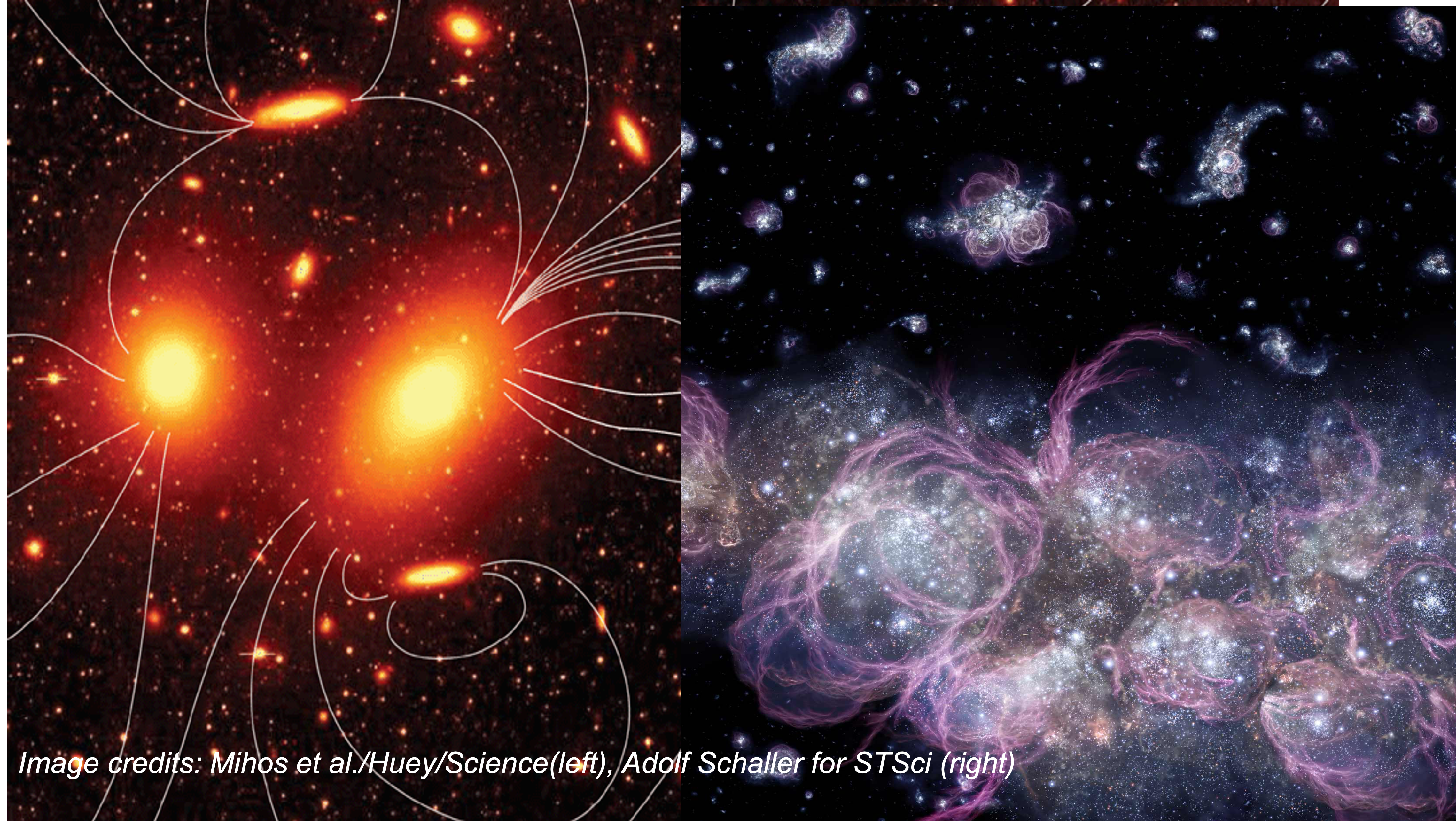
My research asks how radio signals can reveal things we cannot see directly: magnetic fields in Space, the matter between galaxies,
and the early era when the first stars and galaxies were born.
Because light changes as it travels, it carries a record of the places it has passed through.
I develop theoretical and computational methods to decode that record,
from cosmological radiative-transfer formalisms to
tools for analyzing structure and magnetic helicity in radio data.
These methods help connect theory and simulations of cosmic environments to observations from
radio telescopes.
In teaching and mentoring, I care deeply about growth: helping students build understanding step by step,
learn from uncertainty, and see physics as something they can actively reason through.
Through this website, I share research insights,
educational thoughts, and
a collection of resources focused on STEM — especially physics, astronomy, and astrophysics -
hoping to inspire a shared journey of learning and wonder.
Intro
I'm Jennifer Chan, a Visiting Assistant Professor of Physics at Oberlin College.
Previously, I was
a postdoctoral fellow at the Canadian Institute for Theoretical Astrophysics (CITA) and
the Dunlap Institute for Astronomy & Astrophysics
at the University of Toronto, supported by the joint CITA and
University of Toronto Faculty of Arts & Science Fellowships.
I remain active as a CITA Inc. Member and Dunlap Associate.
I received my Ph.D. and M.Sc. in Astrophysics from University College London, and
Bachelor in Physics at the University of Oxford.
I investigate cosmic magnetism:
how magnetic fields arise, permeate galaxies, and influence the Universe.
I also stydy the "teenage years" of the cosmos,
when the first stars, the first galaxies,
and the first quasars (extremely bright objects powered by black holes) transformed the
early, simple, neutral Universe (captured by the Cosmic Microwave
Background (CMB) radiation) into
the intricate,
structured cosmos we see today, brimming with magnetized plasma.
The journey of light is my guide.
By modeling how radio signals are emitted and transformed as they travel,
I connect physical models of cosmic environments with modern radio telescope data.
My research and teaching continually inform one another.
My research reminds me that
physics grows through asking good questions, building models,
testing assumptions,
and learning from uncertainty.
My teaching, in turn, sharpens how I explain ideas,
listen to different ways of thinking, and
see familiar problems from new angles.
Beyond my research and teaching,
I take delight in forming and cultivating meaningful connections,
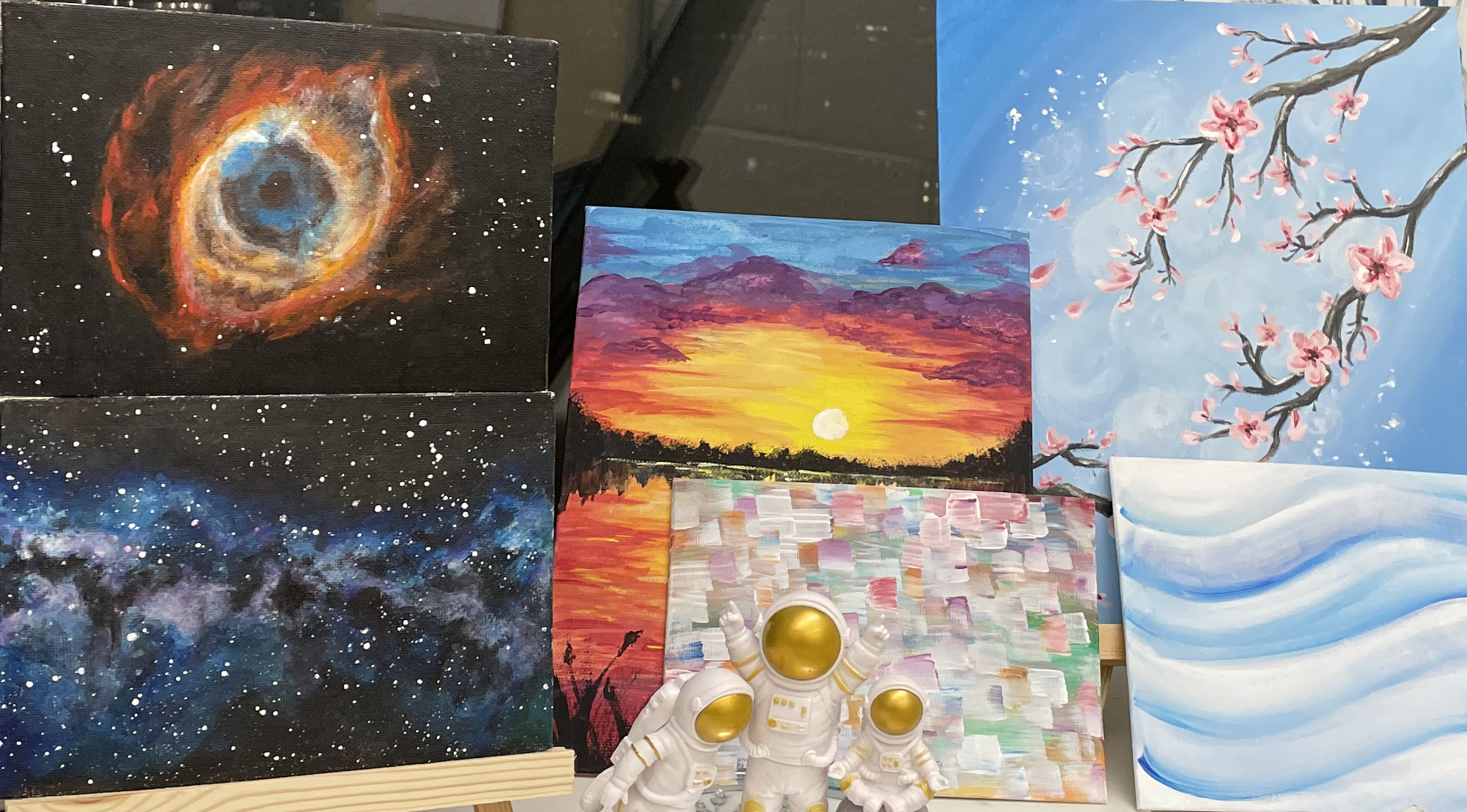
painting space-inspired art,
savoring delicious food, and
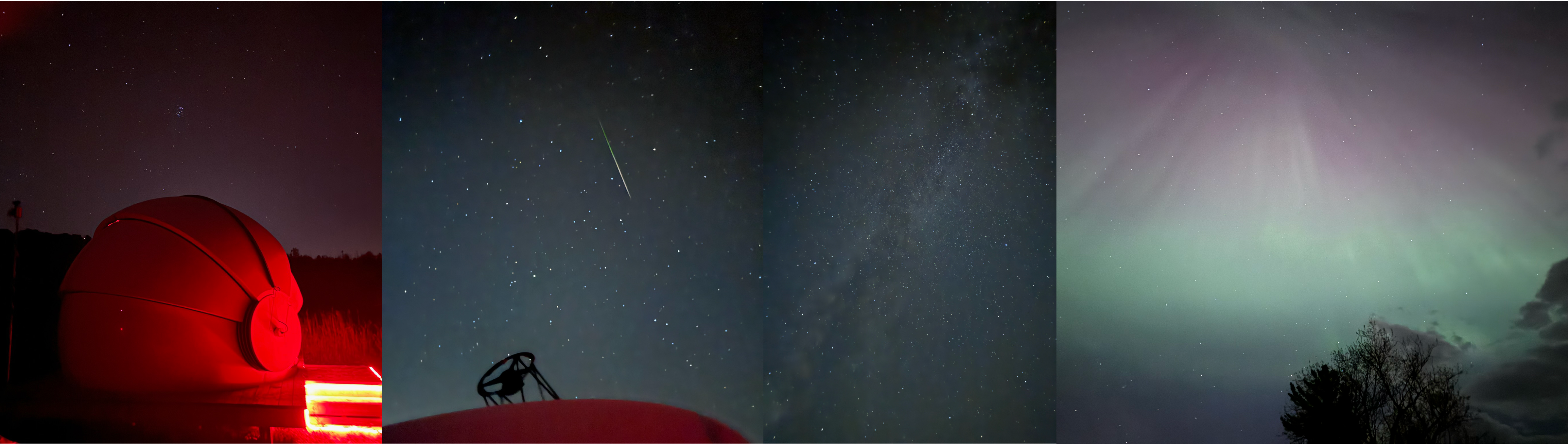
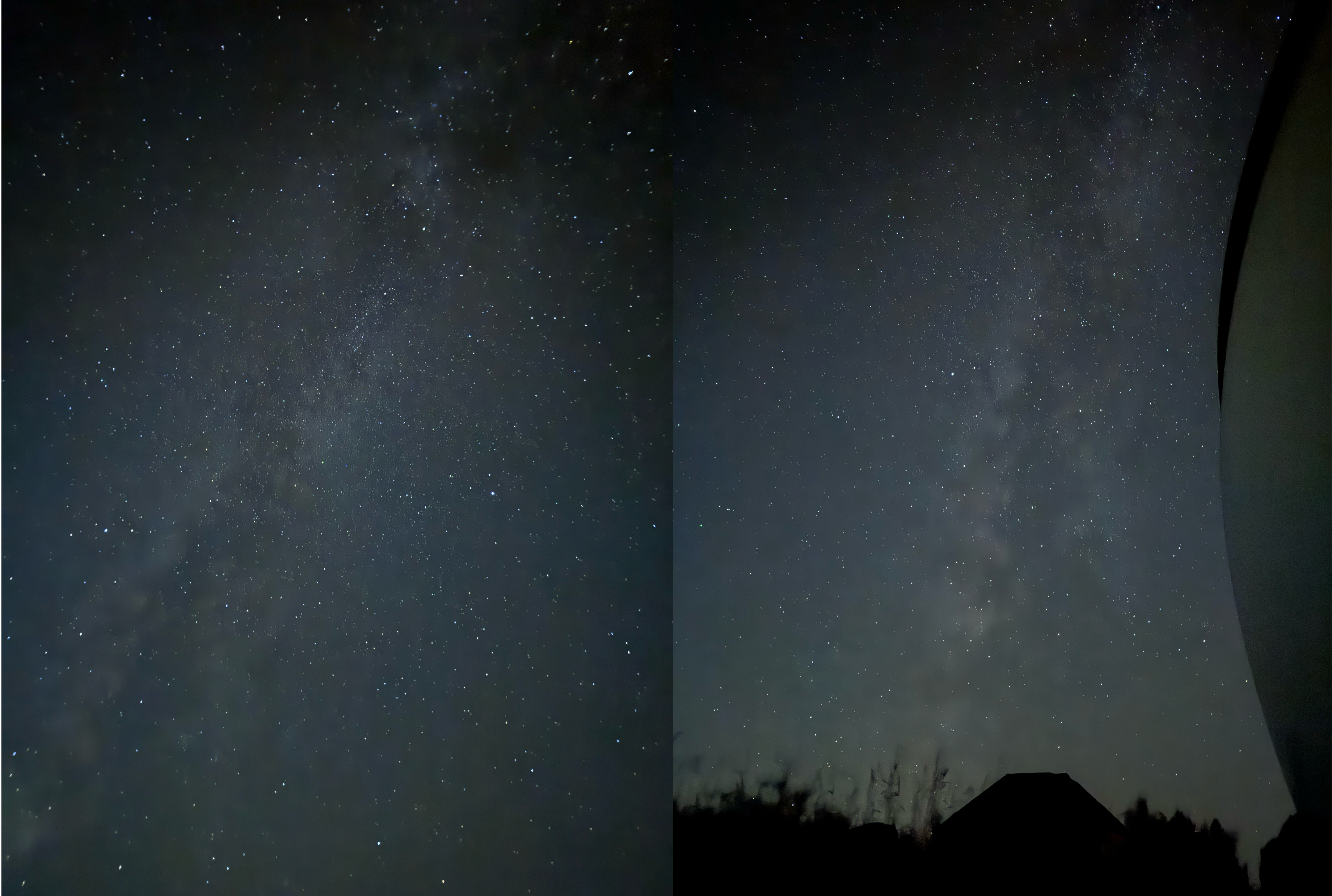
exploring the beauty of nature.
Quick links to
Teaching & Mentoring
Teaching, for me, is a two-way journey.
I believe that education is not just about imparting knowledge
but about learning and growing alongside my students.
Every interaction — in class, office hours, lab, mentoring, or outreach — also helps me grow as an educator.
At Oberlin College,
I teach introductory physics,
laboratory/workshop courses,
and upper-level electricity and magnetism.
I also mentor undergraduate research students in computational astrophysics,
cosmic magnetism, and radio-wave propagation.
Before joining Oberlin, I taught physics and mathematics at the GCE A-Level and IBDP levels,
guest lectured at undergraduate and graduate levels,
graded Master’s courses, and supervised research projects.
I strive to make physics and astronomy accessible, rigorous, and connected to students’
questions. My teaching emphasizes hands-on problem solving, timely feedback,
transparent expectations, and inquiry-based learning that helps students grow as
independent thinkers.
Along the way, I have mentored students with aspirations spanning academia,
research, and industry. Watching them grow and carve their own paths
has been one of the most rewarding aspects of my career.
If you are passionate about STEM and education, please feel free
to reach out.
Together, we can build an engaging, supportive network that
nurtures insightful discussions,
sparks fresh ideas, and cherishes our shared curiosity.
Quick links to
Research
From Light to Insight: Uncovering How the Universe Evolved to the Current State
How Do We Uncover the Universe Evolution Story Using Cosmic Signals?
Magnetic Fields in the Changing Universe:
Imagine putting on a pair of special sunglasses that reveal hidden patterns in everyday scenes.
I use a type of light called polarized continuum radiation to do
something similar with galaxies, clusters of galaxies, and the vast cosmic web.
This light exposes the invisible magnetic fields — like hidden “threads” —
that help regulate where stars are born,
influence how galaxies grow and change,
and guide high-energy particles, among many other important roles.
Hydrogen Gas in the Changing Universe:
I also study the 21-cm line radiation,
a distinctive signal produced by neutral hydrogen —
the most abundant element in the Universe.
As the Universe expands, this light is stretched out (or “redshifted”), letting us look back in time.
It tells the story of the Epoch of Reionization —
a critical period when the Universe transformed from being filled with neutral gas
to becoming ionized.
Think of the Universe’s evolution as a journey from infancy to maturity —
from its embryonic phase captured in
Cosmic Microwave
Background (CMB) ,
to a mature cosmos filled
with stars, galaxies, and
black holes.
Bridging Theory and Observation
To turn our ideas of how the Universe evolved into real, testable predictions,
I use cosmological radiative transfer that I derived
from conservations laws of physics.
This framework
accounts for how light interacts with matter as the Universe expands.
In simple terms, it allows us to take
our models of the evolving universe to precise observables and
see if they match what we observe through telescopes.
Innovative Analysis Tools for 360° Datasets
I’ve also developed a tool called
curvelets on a sphere.
Think of it as a smart analysis tool that scans a full 360° view,
efficiently identifying and characterizing curved or elongated features.
Originally designed to study all-sky astronomical images,
it can also work with any spherical dataset —
from 360° panoramic photos to
medical imaging data like brain scans, as well as examples from the
Science
On a Sphere Dataset Catalog.
It helps reveal hidden patterns and
allows us to perform detailed,
quantitative studies of curvilinear structures across different scales and directions.
Check out this blog post
and our open-source code.
Why Does This Matter?
By combining these techniques,
my research builds tools that bridge theory and observation,
paving a concrete pathway to unravel the story of our evolving Universe.
We study how gas and magnetic fields work together to shape galaxies and
the grand structure of the cosmos — and how they, in turn,
are shaped by the processes of structure formation and evolution,
which lie at the very heart of modern astrophysics and cosmology.
In addition, we examine how the journey of different types of light,
traveling vast distances to reach us, offers new insights
into these cosmic phenomena!
Whether you're a curious learner, a physics/astronomy/astrophysics student,
or an educator looking for inspiring examples of how science unlocks
the secrets of our Universe,
if you’d like to hear more or get an engaging glimpse into the dynamic processes
that have sculpted the cosmos over billions of years,
please feel free to check out the educational resources and outreach initiatives.
American Physical Society (APS): Offers resources on careers, funding opportunities, and professional development, along with news on the latest research.
CASCA (Canadian Astronomical Society): Provides support through conferences, publications, and professional development opportunities for Canadian astronomy.
Institute of Physics (IoP): A professional body for physicists offering resources on education, research, and career development.
European Astronomical Society (EAS): Promotes the advancement of astronomy in Europe through collaboration, conferences, and professional support.
General Academic and Research Resources
arXiv: A preprint repository covering physics, astronomy, astrophysics, and more. Stay updated on current research trends and read papers before formal publication.
NASA Astrophysics Data System (ADS): A digital library portal offering access to a vast collection of research papers and articles in astronomy and physics.
Astrobites: A daily astrophysical literature journal written by graduate students, summarizing recent research papers in a digestible way for undergraduate students.
Zooniverse: A platform for citizen science projects, allowing anyone to contribute to real scientific research across astronomy, ecology, humanities, and more.
Educational Platforms and Online Courses
MIT OpenCourseWare: Free lecture notes, exams,
and videos from MIT’s physics courses. Great for exploring advanced topics
and preparing for graduate studies.
Coursera and
edX:
Platforms offering courses on astrophysics, physics,
and coding techniques taught by experts from leading universities worldwide.
Physics Today: A platform for news, research updates, and commentary on the latest developments in physics and related sciences.
Physics World: News, features, and analysis covering all areas of physics, including research breakthroughs,
industry trends, and educational resources.
Perimeter Institute Career Trajectories: Insights into career paths and opportunities for students and researchers in theoretical physics, featuring testimonials and guidance from Perimeter alumni.
astroEDU: An open-access platform providing peer-reviewed astronomy education activities and resources.
astroEDU Conference: Proceedings of conferences dedicated to astronomy education, bringing together educators, researchers, and communicators to share best practices and innovations.
Dunlap Institute's YouTube Channel: Videos offering insights into research and developments in astronomy and astrophysics, aimed at a general audience.
CITA Seminars: Specialized seminars and talks on various astrophysics topics.
Stack Overflow: A community-driven Q&A website for coding questions and solutions.
Physics Stack Exchange: A Q&A community for asking technical questions and learning from professionals and academics.
AstroBetter: A community-driven blog and resource site offering tips, tools, and best practices for professional astronomers, including career advice, software tutorials, and teaching resources.
Time and Date: Offers global clocks, time zone info, sunrise/sunset, moon phases, eclipses, and night sky tracking for stargazing.
Observation Tools
Clear Sky Maps: Provides detailed weather forecasts and observing conditions to help plan your stargazing sessions.
Stellarium Web: An interactive planetarium tool that shows a realistic night sky map, allowing users to explore stars, planets, constellations, and deep-sky objects in real-time.
Heavens-Above: Provides accurate predictions for satellite passes, including the ISS and Iridium flares, as well as information on comets, asteroids, and planetary alignments.
Interactive Sky Chart: Customizable sky maps to help amateur astronomers find stars, constellations, and celestial events from any location on Earth.
Light Pollution Map: Visualizes light pollution levels worldwide, helping stargazers find dark sky sites for optimal observing conditions.
Space Weather Live: Real-time data on auroral activity, solar wind, and geomagnetic storms. Includes KP index predictions and aurora forecasts.
Explore a range of astronomy
research opportunities,
educational programs,
and events available at the Canadian Institue for Theoretical Astrophysics,
the University of Toronto, in Toronto, or across Canada:
Undergraduate Astronomy Research Opportunities at the University of Toronto (UofT) and the Canadian Institute for Theoretical Astrophysics (CITA):
Dunlap Summer School: A hands-on program in instrumentation and observational techniques for upper-year undergraduates and early graduate students in astronomy, physics, or engineering.
Other Summer Educational Programs:
Perimeter Scholars International (PSI) Start Program: An introductory program in theoretical physics for upper-year undergraduates, preparing them for advanced studies through intensive coursework and research exposure.
Free public events organized by students in the Department of Astronomy & Astrophysics at UofT. Enjoy feature talks, planetarium sessions, interactive demos (including meteorites!), and telescope observing opportunities.
Free public events at the Great Hall in Toronto featuring fun games, astronomy news, TED-style talks, and prizes! Roaming astronomers from the Dunlap Institute, UofT, and CITA engage with participants and answer questions.
Annual Events (at UofT, across the city of Toronto, or at other universities) :
Science Rendezvous UofT: An annual public science festival at the University of Toronto featuring hands-on activities, demonstrations, and talks to inspire curiosity and engagement in science.
Doors Open Toronto: An annual event offering public access to architecturally, historically, and culturally significant buildings across Toronto, including science and educational facilities.
Science Rendezvous: Canada’s largest science festival, featuring interactive exhibits, demonstrations, and talks to inspire public engagement with science, technology, engineering, and mathematics.
NSERC Student Resources: Funding opportunities, scholarships, and research programs for undergraduate and graduate students in natural sciences and engineering in Canada.
Mitacs: Offers research internships, fellowships, and funding opportunities for undergraduate and graduate students in Canada, focusing on industry-academic collaboration.
This resource list was compiled with the assistance of ChatGPT by OpenAI.
This is bold and this is strong. This is italic and this is emphasized.
This is superscript text and this is subscript text.
This is underlined and this is code: for (;;) { ... }. Finally, this is a link.
Heading Level 2
Heading Level 3
Heading Level 4
Heading Level 5
Heading Level 6
Blockquote
Fringilla nisl. Donec accumsan interdum nisi, quis tincidunt felis sagittis eget tempus euismod. Vestibulum ante ipsum primis in faucibus vestibulum. Blandit adipiscing eu felis iaculis volutpat ac adipiscing accumsan faucibus. Vestibulum ante ipsum primis in faucibus lorem ipsum dolor sit amet nullam adipiscing eu felis.
Preformatted
i = 0;

while (!deck.isInOrder()) {
    print 'Iteration ' + i;
    deck.shuffle();
    i++;
}

print 'It took ' + i + ' iterations to sort the deck.';